[ Disclosure: This post contains affiliate links. Read our full Disclaimer for more details. ]
There is a specific, unsettling moment many people experience during their morning routine: you finish brushing, spit into the sink, and notice a distinct trail of crimson. The confusion stems from the lack of symptoms—your teeth don’t ache, your gums aren’t throbbing, and you haven’t sustained any injury. Yet, that persistent “pink toothbrush” remains.
Many patients ask their dentists why gums bleed when brushing only, even when their teeth feel perfectly healthy and there is no discomfort throughout the rest of the day. This localized bleeding is rarely a random occurrence; rather, it serves as a clinical “stress test” for your oral health. While it might seem like a minor annoyance, it is actually your body’s primary warning system.
When the friction of a toothbrush triggers a bleed that isn’t present during eating or speaking, it points to specific issues ranging from mechanical trauma to the early stages of periodontal disease. Understanding this trigger is the first step toward restoring your gum health.
The Anatomy of a Bleeding Gum
To understand why gums bleed when brushing only, one must look at the delicate landscape where the tooth meets the soft tissue. The primary site of this concern is the gingival sulcus—a microscopic, V-shaped groove that surrounds the base of each tooth. In a healthy mouth, this pocket is shallow, typically measuring between one and three millimeters in depth.
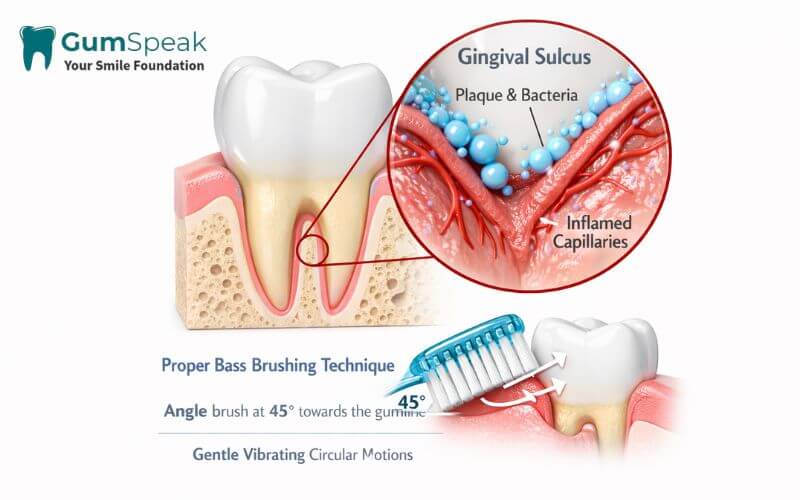
When oral hygiene is inconsistent, this sulcus becomes a sanctuary for dental plaque, a sticky biofilm of bacteria. As plaque matures, it releases metabolic byproducts and toxins that penetrate the thin lining of the sulcus. According to Healthline, this process causes the body’s immune system to trigger an inflammatory defense, characterized by increased blood flow to the area.
This process causes the surrounding capillary walls to become thin and fragile—a state known clinically as being “friable.” While these weakened vessels may remain intact during normal activities, they lack the structural integrity to withstand the mechanical friction of toothbrush bristles. When you brush, the bristles provide just enough pressure to rupture these engorged capillaries, explaining why gums bleed when brushing only in specific areas.
7 Hidden Causes Explaining Why Gums Bleed When Brushing Only
When investigating the root cause of the “pink toothbrush,” it is essential to look beyond the surface. Bleeding is a symptom, not a disease itself. Below are the seven primary culprits that cause gum tissue to fail under the pressure of hygiene.
1. Gingival Friability (Early-Stage Gingivitis)
The most frequent cause of bleeding is gingivitis, the earliest stage of periodontal disease. When plaque is left at the gumline, it hardens into tartar. This leads to gingival friability, where tissues become so inflamed that the slightest touch causes capillaries to rupture.
2. Mechanical Trauma: Scrubbing vs. The Bass Method
Using a vigorous “horizontal scrubbing” motion acts like sandpaper on delicate soft tissue. This mechanical trauma physically tears the gingival epithelium. Experts recommend the Bass Method: angling bristles at a 45-degree angle toward the gumline to massage the area rather than abrading it.
3. Bristle Abrasiveness: The Danger of “Medium” Bristles
While “Medium” and “Hard” toothbrushes are still sold, WebMD notes that most professionals advise against them. These stiff fibers often explain why gums bleed when brushing only, as they are too rigid for the sensitive sulcus tissue.
4. Oral Microbiome Imbalance
Your mouth is a complex ecosystem. When pathogenic bacteria begin to outnumber beneficial ones, they produce acidic byproducts that keep gums in a state of chronic inflammation. → Read our full [Oral Microbiome Guide] to learn how to restore bacterial harmony.
5. Localized Inflammation from Trapped Debris
“Food impaction” occurs when fibrous debris becomes lodged deep within the periodontal pocket. The brush agitates this trapped debris, causing localized bleeding that won’t resolve until the area is thoroughly irrigated or flossed.
6. Vitamin C and K Deficiencies: The Systemic Link
Vitamin C is critical for collagen synthesis, while Vitamin K is essential for blood clotting. If your diet is low in these nutrients, your gums may lose their ability to maintain capillary integrity under the pressure of a toothbrush.
7. Hormonal Influence (Progesterone & Blood Flow)
Increased levels of progesterone—common during pregnancy or specific phases of the menstrual cycle—can make the gums exceptionally sensitive to mechanical stimuli. This is a common reason why gums bleed when brushing only during specific times of the month.
The 4-Step Professional Fix
If you have identified why gums bleed when brushing only, the next objective is to transition to proactive prevention.
- Step 1: Downgrade Your Bristle Strength: Switch to a “Soft” or “Extra-Soft” toothbrush immediately.
- Step 2: Master the Bass Method: Angle your brush at 45 degrees. Use gentle circles to break up biofilm rather than “sawing.”
- Step 3: Strategic Interdental Cleaning: Use a water flosser to clear bacterial harborages. (Learn more in our [Gum Infection Home Remedies] guide).
- Step 4: Incorporate Alcohol-Free Rinses: Use an antimicrobial mouthwash to reduce the bacterial load without drying out the oral mucosa.
Serious Red Flags: When to See a Dentist
While understanding why gums bleed when brushing only can help you manage minor issues at home, you must see a specialist if you notice loose teeth, receding gum lines, or persistent bad breath. Professional cleanings are often the only way to remove the tartar causing the initial inflammation.
Common Mistakes That Make Bleeding Worse
- Brushing too hard
- Skipping flossing
- Using alcohol mouthwash
- Ignoring early bleeding
Conclusion: Ending the “Pink Toothbrush” Habit
Addressing the question of why gums bleed when brushing only is a vital step in long-term health. By switching to softer tools and addressing the underlying bacterial balance, you can effectively eliminate this phenomenon.
If you have corrected your technique but still face persistent inflammation, it may be time to address your oral health from the inside out.
Check out our [ProDentim Review] to see if internal microbial support can stop the bleed for good.
Frequently Asked Questions
Is it normal for gums to bleed only when I brush?
No, healthy gum tissue should never bleed from routine brushing. If you notice blood only during your hygiene routine, it typically indicates localized inflammation (gingivitis) or mechanical trauma from using too much pressure or a hard-bristled brush.
Can I reverse bleeding gums at home?
In most cases, early-stage bleeding (gingivitis) can be reversed in 7 to 14 days by switching to a soft toothbrush, adopting the Bass Method of brushing, and consistent flossing. However, if the bleeding persists, it may be a sign of tartar buildup that only a professional cleaning can remove.
Why are my gums bleeding even though I brush every day?
Frequency isn’t the only factor; technique and the oral microbiome matter. You may be missing the plaque hidden in the gingival sulcus (the pocket between the tooth and gum) or your oral bacteria may be out of balance
Should I stop brushing if my gums bleed?
No. Stopping allows more plaque to accumulate, which worsens the inflammation and leads to more bleeding. Instead, continue brushing but switch to a gentler technique and an extra-soft toothbrush until the tissue heals.