This post contains affiliate links. Read our full Disclaimer for more details
Stress and gum health are more closely connected than most Americans realize. You probably know that a high-pressure job or personal anxiety can lead to headaches and sleepless nights, but did you know your mouth is often the first place to “speak” when you are overwhelmed? At Gumspeak, we dive deep into the silent warnings your body sends.
The Dangerous Connection Between Stress and Gum Health
It sounds like a proven nightmare, but the science is clear. When you are under chronic pressure, your body enters a “fight or flight” mode, releasing a hormone called cortisol. While cortisol helps you handle immediate danger, a constant flow of it is devastating for your immune system.
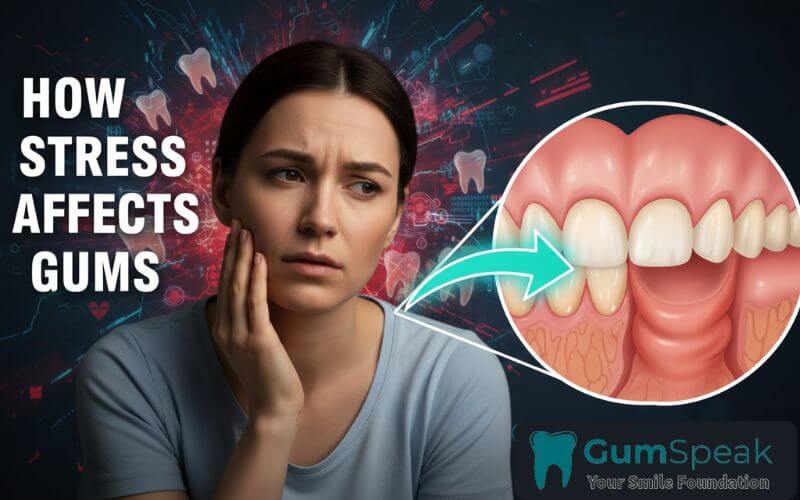
When your immunity is compromised, your body struggles to fight off the bacteria living in your dental plaque. This is the primary reason why stress and gum health often decline simultaneously. High cortisol levels can lead to increased inflammation, making your gums red, swollen, and prone to bleeding—the classic signs of gingivitis.
How Does Stress and Gum Health Impact Your Daily Routine?
Beyond biological changes, mental exhaustion often leads to a decline in self-care. When you are “burnt out,” you might skip your nightly flossing or reach for sugary comfort foods. These behavioral shifts accelerate the damage.
Is Stress and Gum Health Behind Your Bleeding Gums?
Many patients ask, “Why do my gums ache when I’m stressed?” The answer often lies in Bruxism (teeth grinding). Stress causes many people to clench their jaws or grind their teeth, especially during sleep. This physical trauma puts immense pressure on the periodontal ligaments and the bone supporting your teeth. If left unchecked, this can lead to receding gums and even tooth loss.
Silent Symptoms You Should Never Ignore
If you are going through a difficult life event, watch out for these alarming signs:
- Persistent Bad Breath: Stress can cause dry mouth (Xerostomia), which allows odor-causing bacteria to thrive.
- Sudden Sensitivity: Grinding your teeth wears down enamel, exposing the sensitive dentin.
- Gums Pulling Away: If your teeth look “longer,” your gums might be receding due to inflammation and pressure.
How Does Stress Actually Damage Your Gums?
Expert Summary: Scientific research shows a direct link between high stress levels and gum disease. When we are stressed, our body produces more cortisol, which can lead to gum inflammation and a weakened immune response. This makes it harder for your mouth to fight off harmful bacteria. The following video explains how managing your mental well-being is just as important as brushing and flossing for a healthy smile.
Video Credit: Delta Dental via YouTube)
Powerful Strategies to Protect Your Smile Under Pressure
You cannot always eliminate stress, but you can protect your stress and gum health with these effective steps:
- Prioritize “Micro-Habits”: Even if you are exhausted, commit to a 2-minute brush. It is the most rewarding thing you can do for your oral longevity.
- Use a Night Guard: If you wake up with a sore jaw, a custom mouthguard can prevent teeth grinding from destroying your gum line.
- Boost Your Vitamin C: Stress depletes Vitamin C, which is essential for collagen production and gum repair.
- Hydrate Constantly: Fight stress-induced dry mouth by drinking water throughout the day to wash away food particles.
5 Shocking Facts: How Stress and Gum Health Are Linked
If you are navigating a high-pressure season, your mouth may be trying to warn you. Here are five critical ways stress and gum health collide, leading to symptoms you should never ignore:
- The Cortisol Inflammatory Spike: When you are overwhelmed, your body’s cortisol levels skyrocket. This hormone doesn’t just manage stress; it triggers immediate systemic inflammation. This is the primary reason stress and gum health decline, as your gums become red, swollen, and prone to “stress-induced gingivitis.”
- Anxiety-Driven Dry Mouth (Xerostomia): Chronic anxiety often reduces saliva production. Without this “natural shield” to wash away food particles and neutralize acids, odor-causing bacteria thrive. This leads to persistent bad breath and an environment where plaque can rapidly damage your stress and gum health.
- Weakened Immune Response: Stress acts as a physical “suppressor” for your immune system. Scientific research shows that high stress makes it 3x harder for your body to heal minor gum nicks or fight off the bacteria living in your dental plaque. If your gums won’t stop bleeding, it’s a sign your immunity is compromised.
- The 250lb Pressure of Bruxism: Stress causes many Americans to unknowingly clench their jaws. This physical trauma, known as Bruxism, can exert up to 250 lbs of pressure on your gum line. This leads to sudden tooth sensitivity and causes your gums to pull away from the teeth (recession).
- The “Burnout” Behavioral Shift: Mental exhaustion often leads to a decline in self-care. During periods of burnout, skipping a single nightly flossing session allows a “plaque biofilm” to harden. This behavioral neglect is a silent but deadly contributor to the link between stress and gum health.
The Gumspeak Verdict: Listening to Your Body
Your mouth is a mirror of your internal well-being. If you notice your gums are acting up during a stressful month, don’t just dismiss it as a minor annoyance. It is a crucial signal from your body asking for a break. According to the American Dental Association, managing your systemic health is a vital part of maintaining a “Grade A” smile.
By addressing the root cause—your mental well-being—you aren’t just saving your mind; you are saving your teeth.
(FAQs)
Can stress cause my gums to bleed suddenly?
Yes, it can. When you are under significant pressure, your body’s inflammatory response increases. This can lead to stress and gum health issues like “Stress-Induced Gingivitis.” High cortisol levels weaken your immune system, making it easier for bacteria to cause inflammation and bleeding, even if you brush regularly.
What are the signs that anxiety is affecting my oral health?
Common signs include waking up with a sore jaw (a symptom of teeth grinding or Bruxism), noticing increased sensitivity to cold, or seeing blood when you floss. Many people also experience “Dry Mouth” when anxious, which reduces saliva and allows plaque to build up faster, further damaging your stress and gum health.
Is gum recession caused by stress permanent?
Unfortunately, once gum tissue recedes, it does not grow back naturally. However, identifying the link between your stress and gum health early can stop the recession from getting worse. Using a night guard and practicing stress-reduction techniques can protect your remaining gum line from the physical damage of clenching and grinding.
Can relaxing actually help heal my gums?
While relaxation alone won’t cure a bacterial infection, reducing your stress levels lowers the cortisol in your system. This allows your immune system to function better and helps your gums heal faster when combined with professional dental cleaning and a solid home-care routine.